

 LARYNX · v1.4.3 · VST3 · AU · AAX
Vocal · one of the 34
LARYNX
The whole vocal chain. One insert.
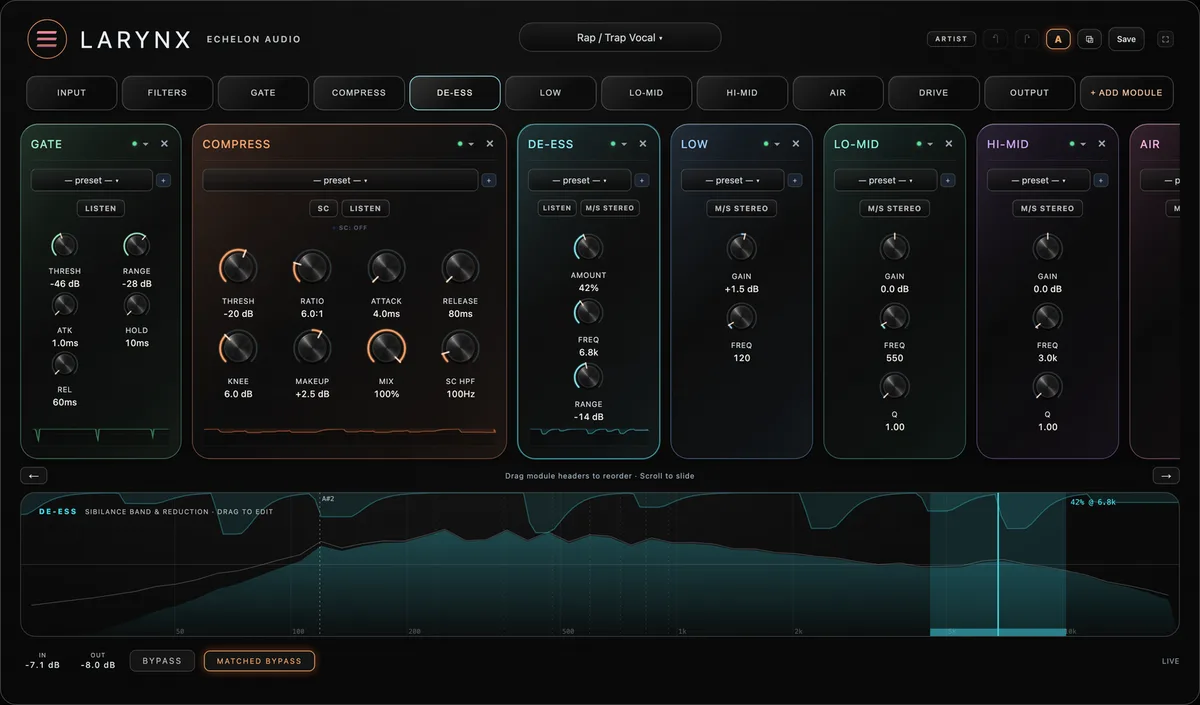
Eight modules from ten types — gate, comp, de-ess, four EQ bands, drive, a 6-band EQ and a dynamic EQ — in one strip.
Own it
$99perpetual · free updates
Trial covers all 34 units, then $17.99/mo. Buy Now goes straight to checkout.
macOS (Universal) + Windows · iLok · New plugins drop Sept 18
Not today? so it’s easy to find again.
Hear it · one instance · level-matched
Program
Pop — level-matched, one instance
Spectrum · LARYNX strip
Processing
Full channel strip in one pass · De-ess + EQ + comp + air · Radio-ready level
Δ Top end
+1.7 dB
Measured on this demo · method
Δ loudness0.0 dBΔ crest+0.5 dBΔ sibilance+1.7 dBTrue peak-2.0 dB
Why it exists
Seven plugins on a vocal means seven windows, seven gain stages, and seven chances to break the chain when you copy it to the next track.
LARYNX puts the whole chain in one strip, in the right order, loaded gain-forward so it sounds finished before you touch a knob. Work left to right, watch the live note readout confirm the take, move on.
In the session
- Work left to right — the chain is already in the right order.
- Watch the live note readout confirm the performance.
- De-ess and EQ in the same view as your compressor.
- Copy one insert to the next vocal, not seven.
Under the hood
HPF → gate → comp → de-ess → EQ → sat✓
Live note readout✓
Eight modules from ten module types✓
A finished vocal in one plugin✓
System requirements
Versionv1.4.3
FormatsVST3 · AU · AAX
macOSmacOS 11+ · Apple Silicon + Intel (Universal)
WindowsWindows 10/11 · 64-bit · VST3 + AAX
LicensingiLok · machine, cloud or USB
DeliveryEchelon Audio Hub